Market

News, analysis and insights on Georgia’s renewable energy market, covering investments, financing, policy developments, electricity market trends and the companies shaping the sector.
Partnership opportunities
Grow your visibility in Georgia’s renewable energy sector

This could be your banner, sponsored article or company feature reaching industry professionals and decision-makers.

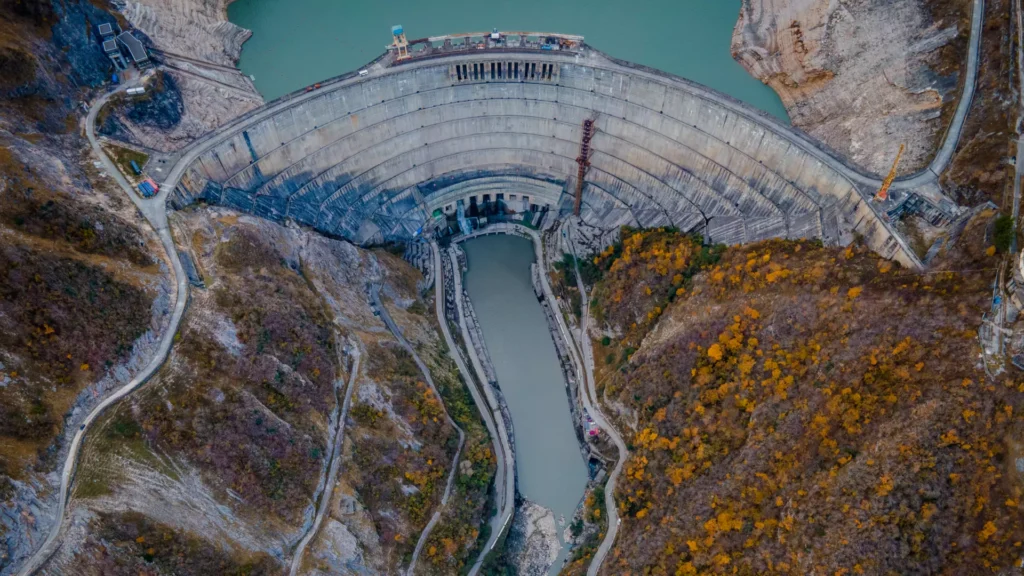
The new model will combine capacity and tariff auctions to support future hydropower projects.
November 16, 2026
GECO has applied to the European Commission for Project of Mutual Interest status for the Caspian–Black Sea–Europe Green Energy Corridor, opening a formal EU assessment process for the planned Azerbaijan–Georgia–Romania–Hungary link.
November 12, 2026
The four governments have signed a strategic partnership agreement at COP31 in Antalya, setting out cooperation on a planned 2–3 GW overland electricity corridor via Türkiye and Bulgaria.
November 12, 2026
A renewable project is not bankable simply because it has a good resource and a viable design. Nino Maghradze of Caucasus Clean Energy Holding explains why seasonal generation, revenue certainty, forecasting and market rules increasingly determine the value of an energy asset in Georgia.
November 10, 2026
The Black Sea Submarine Cable could give Georgia access to a second major electricity market and a new import route. But technical feasibility alone will not make a 1,300 MW interconnector investable. Rouven Stubbe explains what must be demonstrated before the project reaches that point.
October 27, 2026
At a Baku forum on 22 October, the Green Energy Corridor’s feasibility-study results were presented to investors, prospective electricity buyers and suppliers for the first time. The project has now moved into the harder phase: building the commercial case for a planned 2029 investment decision.
October 24, 2026
An estimated 0.5 TWh of electricity was curtailed during May–July, while exports to Türkiye weakened. Galt & Taggart argues that Georgia’s future renewable-support framework should value a project’s contribution to system reliability—not only its installed capacity.
October 23, 2026
Georgia has begun building a rooftop-solar and self-consumption market. The next stage could allow households, businesses and communities to store, share and trade electricity in ways that also support the power system, says Energy Community Secretariat expert Salome Janelidze.
October 9, 2026
The International Renewable Energy Agency says Georgia’s renewable-energy potential will depend on whether national planning, grid investment, market rules and project finance advance together.
October 6, 2026
A conceptual paper by GNERC Chair Davit Narmania proposes using seasonal electricity swaps and reserved cross-border capacity to turn Georgia’s summer surplus into a winter energy-security resource.
October 5, 2026
Sixteen professionals received honorary recognition during Georgia’s Energy Workers’ Day event, held at the historic Zemo Avchala Hydropower Plant near Tbilisi.
September 24, 2026
GREDA says producers need clarity before next year’s high-water season, while GNERC argues that regulating hydropower and storage are essential to managing Georgia’s recurring seasonal surplus.
September 21, 2026
Georgia’s Energy Development Fund says it is finalising applications that could seek between USD 10 million and USD 50 million for green projects, although the proposed projects have not yet been disclosed.
September 21, 2026
CESI’s Alessandro Crippa explains why 1,300 MW was selected for the proposed Black Sea interconnection, how engineers approach a 1,100 km deep-water HVDC link, and which technical milestones would signal the project’s transition towards implementation.
September 18, 2026
The economy minister has outlined a tender timetable for seabed investigations supporting the proposed electricity link between Georgia and Europe.
September 17, 2026
Prysmian’s Tommaso Noya explains what a 1,000 km-plus Black Sea power link requires in practice — from seabed surveys and deep-water installation to HVDC technology, vessel capacity, onshore grid development and long-term reliability.
September 17, 2026
Georgia’s 2026 grid-rule amendments have tied transmission connection rights more closely to project viability, construction progress, capacity consistency and contractual deadlines. For renewable-energy developers, the grid connection agreement now has to be managed as part of a wider legal and investment structure.
September 8, 2026
GSE’s Onise Chichinadze explains how Georgia’s Guarantees of Origin system works, why certification matters even in a renewable-heavy power system, and how closer integration with European frameworks could create new opportunities for generators, exporters and corporate buyers.
September 8, 2026
Combined wind and solar generation increased sharply in January–July 2026, supported by new capacity, although the two technologies still represent a small share of Georgia’s electricity supply.
September 2, 2026
Bank lending to Georgia’s energy sector rose 30% year-on-year in July 2026, while overdue loans remained at just 0.03% of the portfolio.
August 27, 2026
Azerbaijan wants to expand electricity exports toward European markets, with Georgia positioned on both the existing overland route through Türkiye and the planned Black Sea corridor.
August 12, 2026
Georgia’s electricity system links western hydropower, eastern gas-fired generation, cross-border interconnectors and two main distribution networks. Here is how power moves through the country—and why keeping the system balanced matters as much as producing enough electricity.
August 5, 2026
Georgia’s energy regulator says protection and disconnection mechanisms may not have operated as intended during the second nationwide system outage in July.
August 4, 2026
Preliminary findings show that Georgia’s power system became isolated from Azerbaijan before frequency and voltage fell to critical levels, triggering cascading outages.
July 30, 2026
IRENA says Georgia’s main climate and energy plans use different assumptions and long-term pathways, reducing comparability and creating less consistent signals for investors.
July 28, 2026
Energy expert Davit Mirtskhulava says determining the cause of Georgia’s July blackouts requires time, independent expertise and clear interim reporting.
July 28, 2026
Telasi says electricity distribution in Tbilisi is continuing normally, while Georgian banks will maintain GEL services after the EU sanctioned Inter RAO.
July 27, 2026
The Georgian Tourism Association chair discusses rising energy costs, growing interest in solar power, and how clean energy could support Georgia’s tourism competitiveness.
July 27, 2026
Generation restrictions and water spillage during May and June may have cost Georgia’s power sector up to GEL 100 million, according to a preliminary estimate by energy expert Davit Mirtskhulava.
July 24, 2026
International regulators and energy experts will gather in Tbilisi for WFER IX, covering markets, grids, storage, investment and consumer protection.
July 22, 2026
A new 20-year framework strengthens electricity supply and transit cooperation between Azerbaijan and Georgia while supporting wider regional energy connectivity.
July 10, 2026
Georgia's power system needs stronger transmission, storage and export infrastructure to manage seasonal swings — like May 2026, when high hydro output and weak export demand forced generation curbs, says GREDA's Maia Melikidze.
July 10, 2026
The Green Energy Corridor has completed its feasibility study and is moving toward implementation as participating countries develop a regional electricity-trading framework.
July 8, 2026
Georgia’s updated grid rules allow connection capacity held by inactive projects to be released and prioritise developments that demonstrate measurable progress.
June 12, 2026
The Black Sea submarine cable has gained EU Project of Mutual Interest status as Georgia and its regional partners advance technical and institutional preparations.
April 14, 2026
Georgia has introduced a conditional mechanism to waive around GEL 1 billion in penalties for energy projects that meet revised development commitments.
April 8, 2026
Electricity trading has resumed on the Georgian Energy Exchange following a seven-month pause, marking another step in the country’s power-market reform.
March 30, 2026
Georgia aims to increase installed power capacity to 11.5 GW by 2036 through renewable projects, grid investment and battery storage development.
March 9, 2026
Georgia expects hydropower to provide more than 80% of its electricity generation in 2026, underlining the sector’s continued importance to the national energy system.
January 10, 2026
loading more news...

Top headlines

Stay informed

News, projects and analysis from Georgia’s renewable energy sector.

No spam. Unsubscribe anytime.