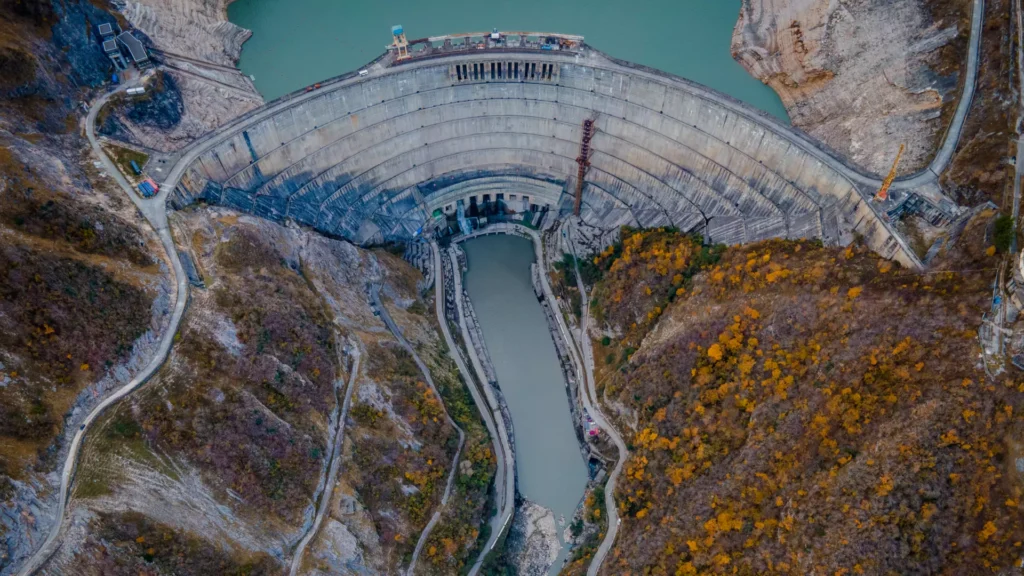
For hydropower investors in Georgia, securing land rights is far more than a property transaction. It requires navigating overlapping legal regimes governing state-owned property, superficies, forests, protected areas, subsoil and water resources. A coherent approach to these interconnected requirements is essential to reducing legal uncertainty, protecting investments and ensuring the long-term viability of HPP projects.
The third Georgia Energy Exhibition and Forum will bring the public and private sectors, international companies, investors and energy professionals together in Tbilisi on 26–27 November. Its organisers explain how the event is evolving alongside Georgia’s energy market.
GREDA says producers need clarity before next year’s high-water season, while GNERC argues that regulating hydropower and storage are essential to managing Georgia’s recurring seasonal surplus.
Georgia’s 2026 grid-rule amendments have tied transmission connection rights more closely to project viability, construction progress, capacity consistency and contractual deadlines. For renewable-energy developers, the grid connection agreement now has to be managed as part of a wider legal and investment structure.
Georgia's power system needs stronger transmission, storage and export infrastructure to manage seasonal swings — like May 2026, when high hydro output and weak export demand forced generation curbs, says GREDA's Maia Melikidze.
Representatives of Georgia’s renewable-energy sector gathered in Kakheti for GREDA’s padel tournament, combining professional networking with an informal industry event.
GREDA has renewed discussion of the 702 MW Khudoni project, while community concerns and the absence of a final development decision remain important considerations.