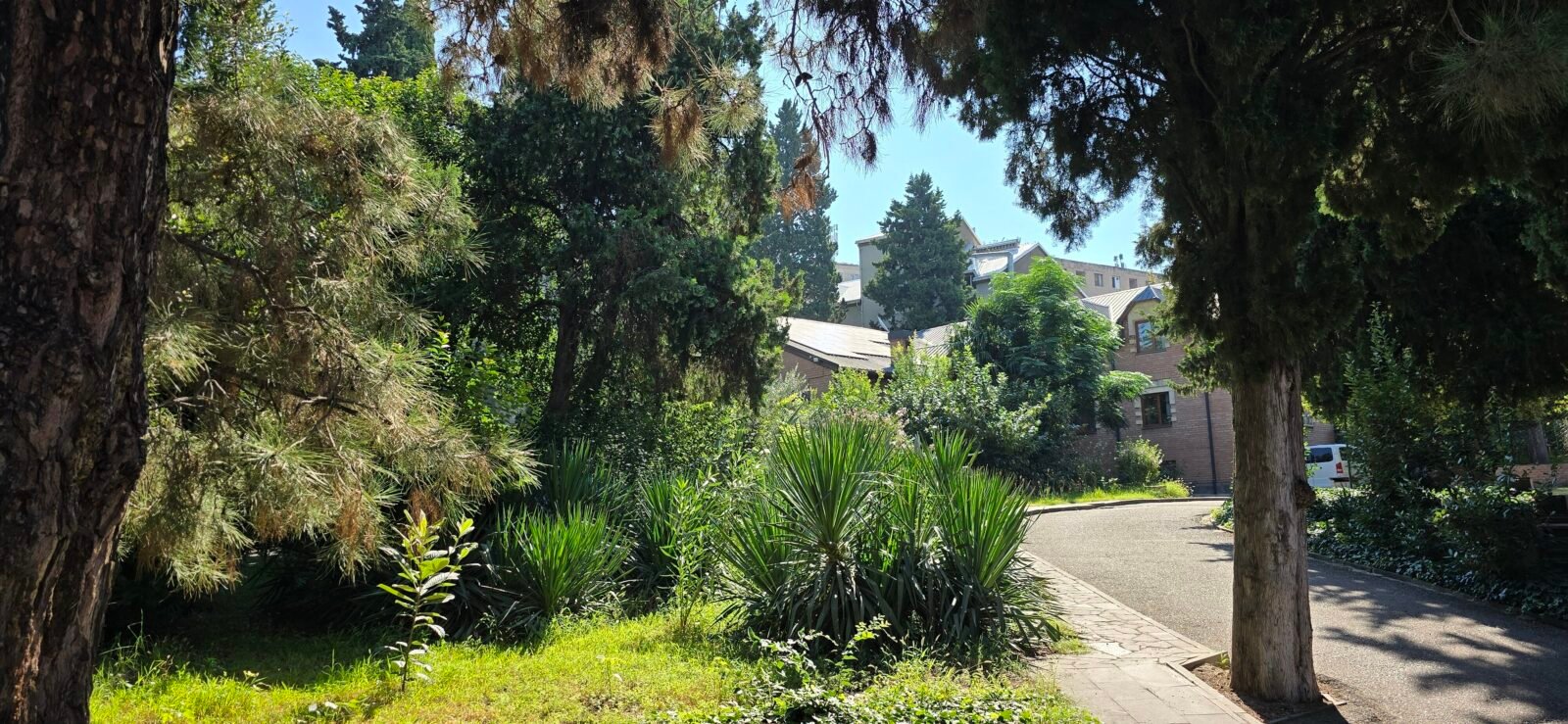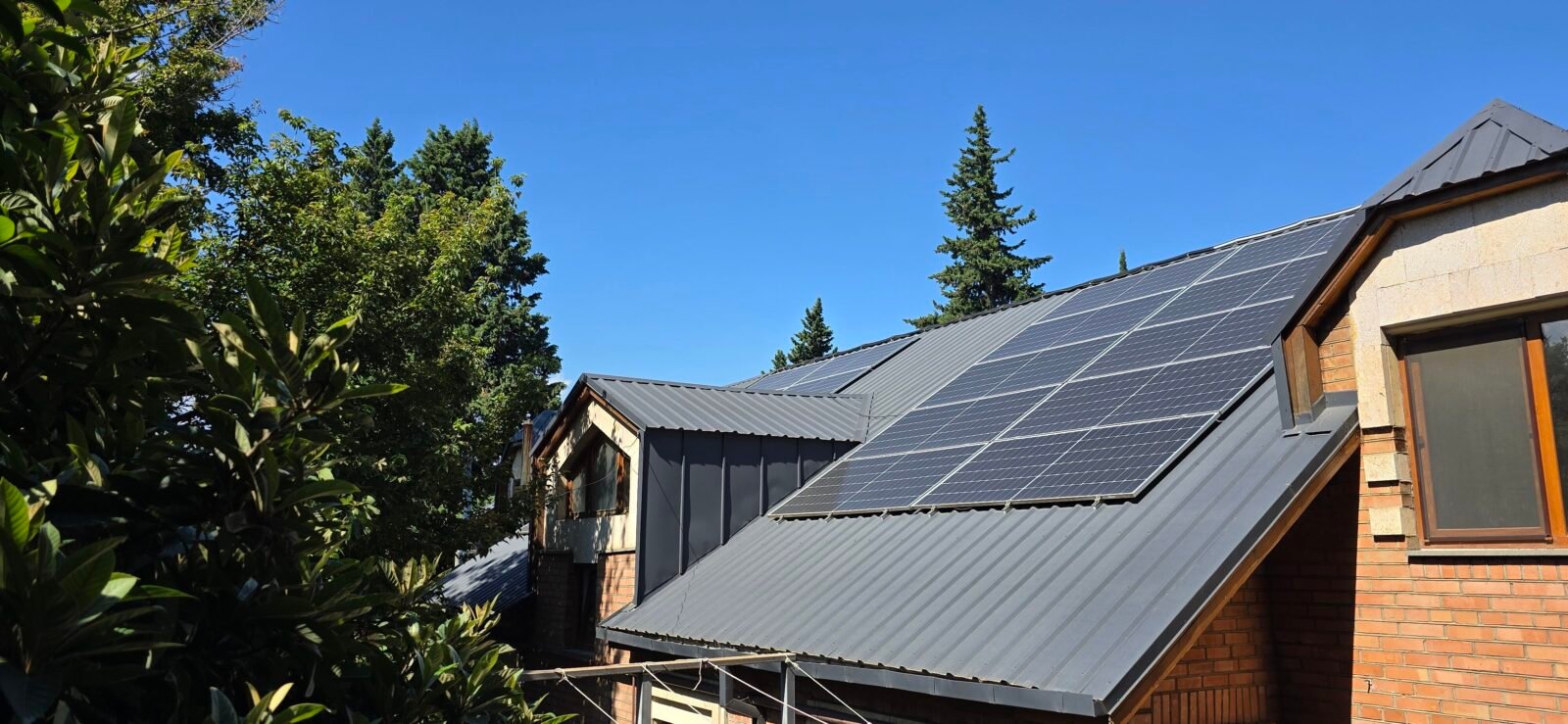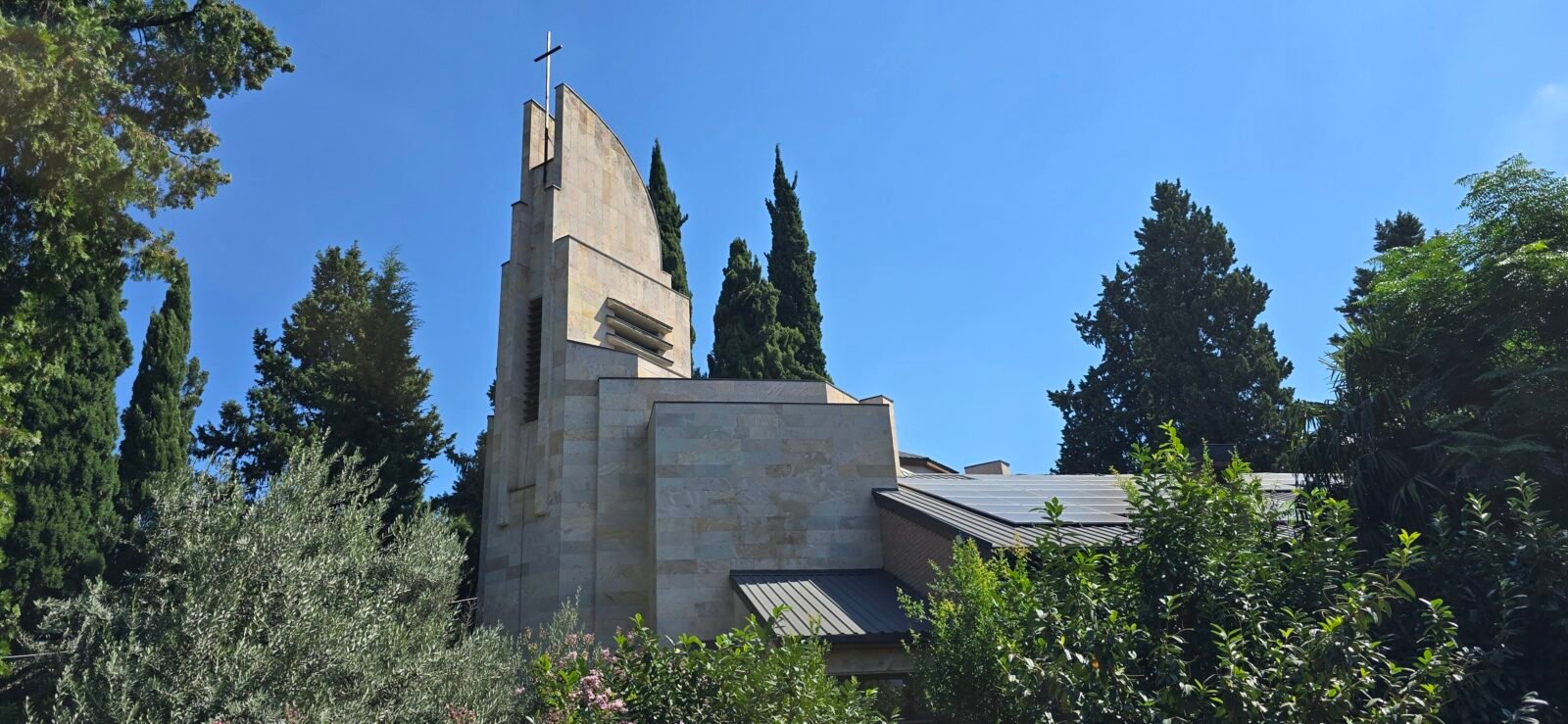



A church in central Tbilisi offers an unusual example of small-scale solar energy in practice.
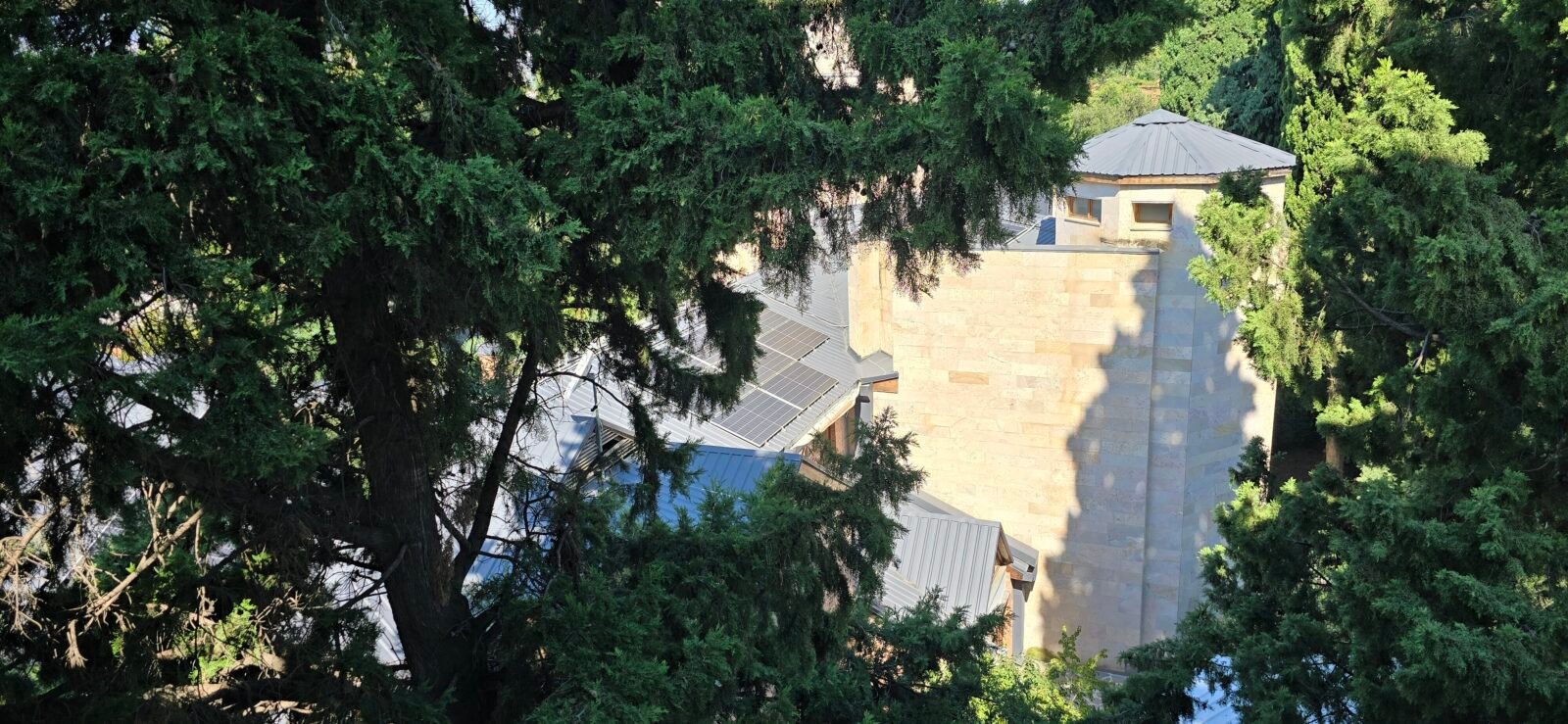
For around three years, the Evangelical-Lutheran Church has been generating electricity from a 33.06 kWp rooftop solar system, with 24 kW of AC capacity, installed across its buildings.
According to Bishop Rolf Bareis, the system has produced enough electricity to cover the church’s annual consumption since it began operating. The church no longer has a net annual electricity expense and receives payment for electricity generated above its own consumption.
The project was financed entirely through donations and installed by Innovation Energy LLC using DAS Solar modules and grid-connected inverters. The original project documentation estimated first-year electricity generation at approximately 41,900 kWh.
A Church with Deep Roots in Tbilisi
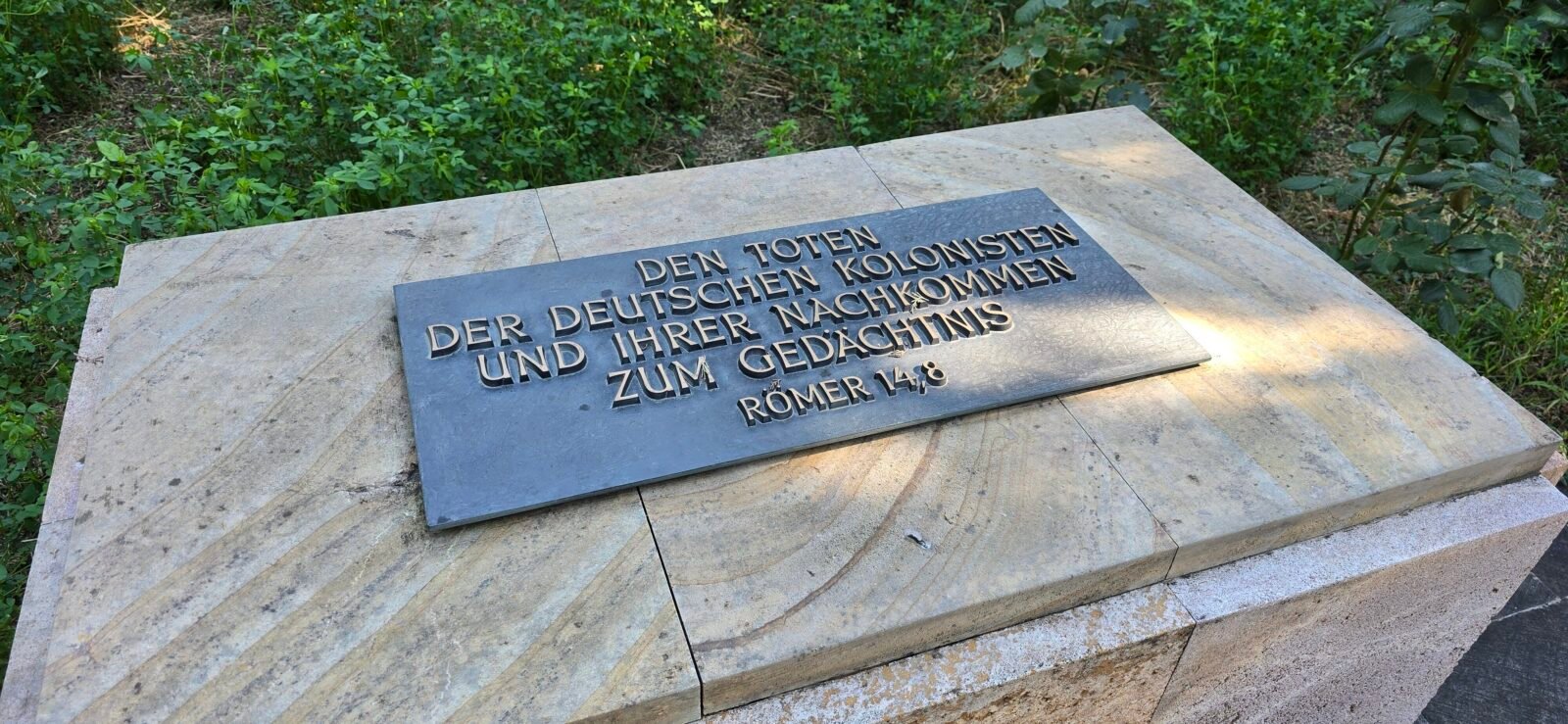
The Evangelical-Lutheran community in Tbilisi dates back to the early 19th century.
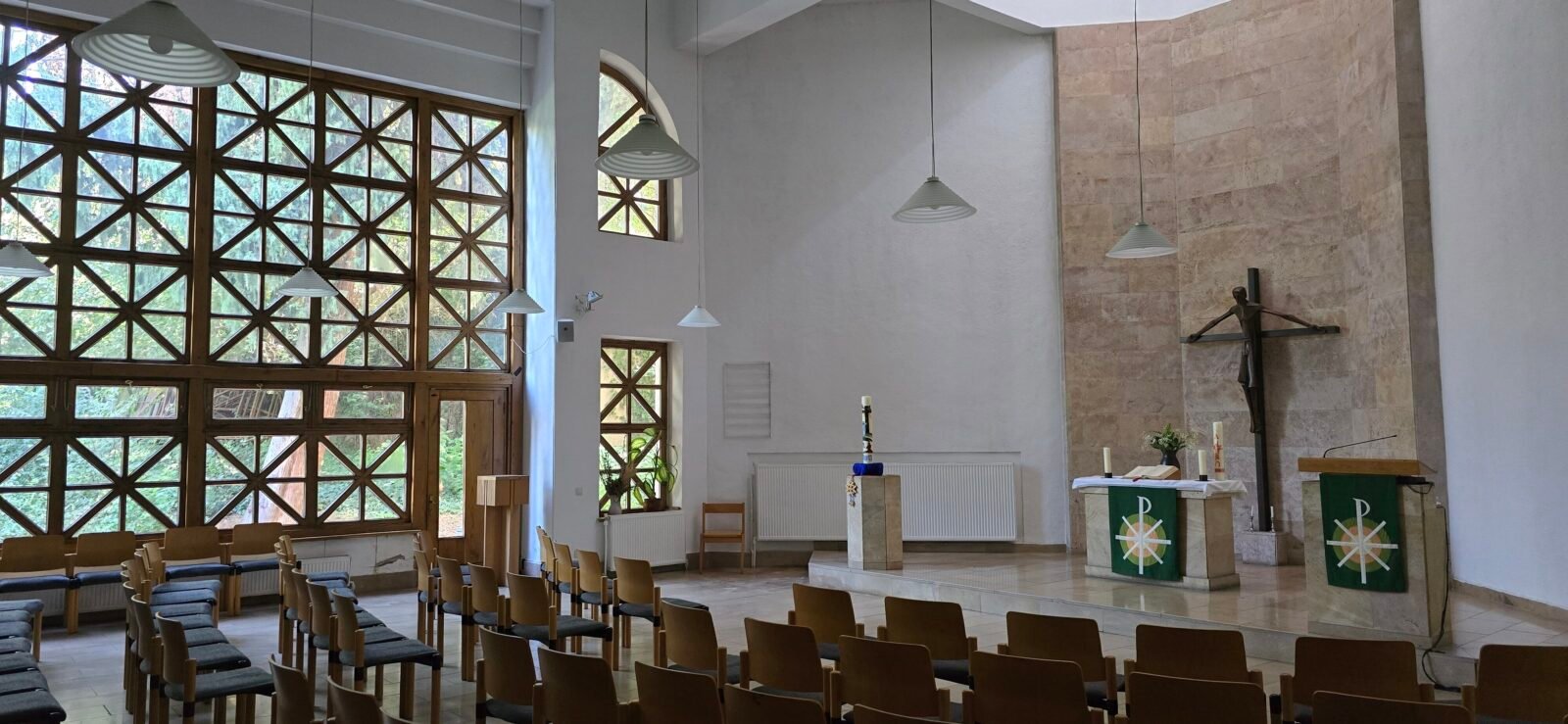
The present Church of Reconciliation was built between 1995 and 1997 on part of the former German cemetery site and was inaugurated in October 1997. Today, it serves as the spiritual and organisational centre of the Evangelical-Lutheran Church in Georgia and the Southern Caucasus.
The revival of the Lutheran community in the 1990s was closely associated with Prof. Dr. Gert Hummel and his wife Christiane, with support from Germany playing an important role in the construction of the present church complex.
Environmental Responsibility and Economics
For Bareis, the decision to install solar was based on both environmental responsibility and practical economics.
He was already familiar with solar energy through his experience in Germany, including its use by private households and church communities.
Georgia’s solar resource made the technology a natural option in Tbilisi, but the motivation was not purely environmental.
The church also wanted to reduce its dependence on purchased electricity and make an investment that would ultimately pay for itself.
Before proceeding, annual electricity expenditure was compared with the expected solar generation and project cost. Based on those calculations, the system was expected to recover its investment in approximately six years.
With electricity prices subsequently increasing, the effective payback period could be shorter.
Producing More Electricity Than the Church Consumes
The system is connected to the electricity grid and operates under Georgia’s small-scale generation framework.
Solar electricity produced during periods when the church does not need it is supplied to the grid. At other times, the site can draw electricity from the network.
This means the church does not require its own battery system to balance production and consumption throughout the day.
On an annual basis, solar generation currently exceeds the electricity consumed by the site, according to Bareis. In practical terms, the installation therefore covers 100% of the church’s annual electricity demand, with surplus generation supplied to the grid.
The church monitors production through a digital monitoring system and compares actual output with expected performance.
So far, Bareis said, the installation has operated without significant technical problems.
Periodic inspections are carried out to identify potential faults early. The panels normally require little cleaning because their angle allows rainfall to remove much of the accumulated dust naturally.
Checking the Roof Before Installation
Installing solar panels on a church building also required consideration of the existing roof structure.
Before installation, the building plans were reviewed to determine whether the roof could accommodate the additional load.
The assessment considered not only the weight of the modules but also external forces such as wind and snow loads.
The existing structure was found to be suitable, allowing the project to proceed without major architectural modifications.
For Bareis, involving an experienced installer was particularly important because the project required more than simply mounting solar panels.
Innovation Energy handled the technical design, installation and commissioning, as well as support with the administrative procedures required for grid connection and net metering.
Solar as an Example for Other Institutions
The installation was also intended to demonstrate that solar energy can work for institutions outside the traditional commercial and industrial sectors.
Visitors notice the panels, and Bareis said the church’s experience has already attracted interest from other religious communities.
He believes similar systems can make sense for churches, NGOs, community organisations and private households where financial conditions and available space are suitable.
The main obstacle for many households, he noted, remains the initial investment. Even when the long-term economics are attractive, not everyone has enough capital available to finance a solar system upfront.
That makes successful operating examples particularly important.
Seeing a neighbouring household, business or community organisation use solar successfully can make unfamiliar technology easier to trust.
Renewable Energy Does Not Remove the Need for Efficiency
Bareis also cautions against viewing solar generation as permission to consume electricity without thinking about efficiency.
“Producing our own energy does not mean we no longer have to think about the energy we waste,” he said.
For him, renewable generation and responsible energy use should go together.
Simple measures — switching off unnecessary lighting, using heating and cooling efficiently and avoiding unnecessary consumption — remain important even when an organisation produces enough renewable electricity to cover its annual needs.
Considering a Larger Solar Project
The church is already considering whether its experience could be expanded.
One possibility under discussion is a larger ground-mounted solar installation on available land.
Rather than using the land exclusively for electricity generation, Bareis is interested in raising the panels sufficiently high to allow continued agricultural use underneath — for example, grazing animals or cultivating crops that benefit from partial shade.
Such an approach could allow electricity generation and agricultural activity to share the same land.
The idea remains at an early stage, but it reflects the broader philosophy behind the church’s existing installation: renewable energy should be practical, financially sustainable and compatible with other uses of space.
After around three years of operation, the rooftop project has already demonstrated that approach on a smaller scale.
Source note: This article is based on a conversation with Bishop Rolf Bareis during a visit to the Evangelical-Lutheran Church in Tbilisi. Technical details are based on project documentation provided for the church’s 33.06 kWp rooftop solar installation. Historical background is based on information published by the Evangelical-Lutheran Church in Georgia and the Southern Caucasus.